Dating Dictionary · Updated September 4, 2026
“Covert Narcissist” Meaning
“Covert narcissism” means narcissistic traits shown in a quiet, self-effacing way. See the everyday patterns and why it is not a formal diagnosis.
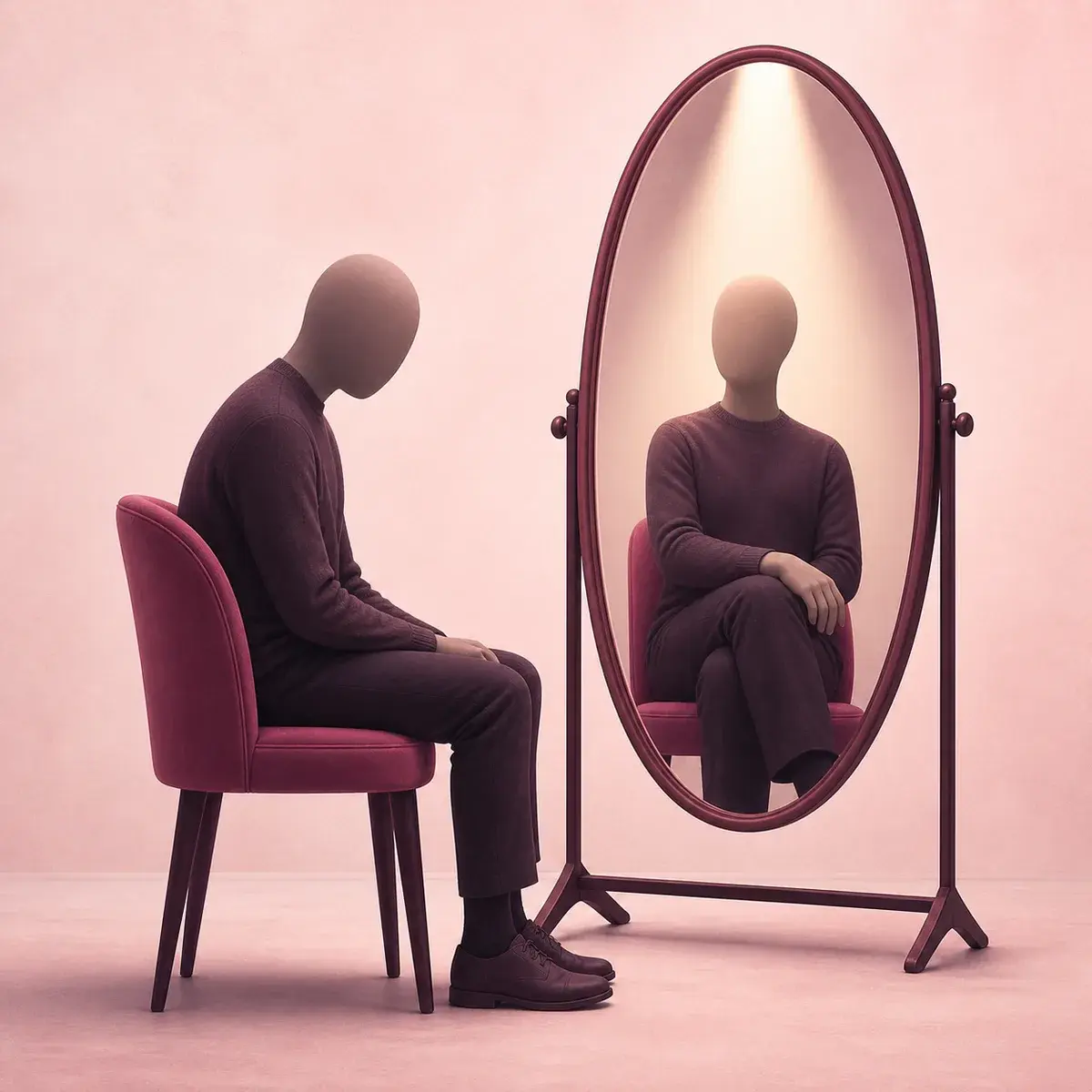
A “covert narcissist” is someone with the core traits of narcissism, such as self-importance, a strong need for admiration, and low empathy, expressed quietly rather than through open bragging. This presentation can look shy, humble, or helpful. Psychology writing connects it to vulnerable narcissism, although researchers do not always use the terms interchangeably. It is a descriptive term, not an official diagnosis: the DSM-5 recognizes narcissistic personality disorder, but it does not list overt and covert as formal subtypes.
The label describes a repeated pattern of behavior, not one bad moment or an off day. Quietness or insecurity alone does not make someone narcissistic.
How Overt and Covert Presentations Can Differ
The same underlying traits can show up in very different ways, depending on the person.
| Shared trait | Overt vs. covert | Source |
|---|---|---|
| Wanting admiration | Overt: may seek attention and praise openly. Covert: may fish for reassurance or sympathy in quieter, indirect ways. | Verywell Mind's covert narcissist overview describes a shared craving for admiration and importance. |
| Sense of self-importance | Overt: may be stated directly and confidently. Covert: may sit behind a modest, reserved, or helpful front. | Contrast drawn in Northwell Health's overt vs. covert comparison. |
| Handling criticism | Overt: reactions may be loud and direct. Covert: may take offense easily, withdraw, sulk, or go quiet. | Northwell Health notes covert narcissists may take offense easily. |
| Empathy and insight | Both presentations can involve limited empathy. Covert: may also lack insight into how their behavior affects other people. | Verywell Mind describes limited empathy; Northwell notes the typical lack of insight. |
The label gets used loosely online, so the specific behaviors matter more than the word itself.
What the pattern looks like day to day
Covert narcissism usually shows up as small behaviors that repeat and build up over time, rather than one dramatic scene. People close to the pattern tend to notice a similar list once these behaviors keep happening:
- Passive aggression: silence, sarcasm, or a cold shoulder instead of a direct complaint
- Prolonged withdrawal: going quiet for days rather than working through a disagreement
- Guilt trips: turning a request or complaint back into evidence that they are unappreciated
- Blame shifting: making a conflict someone else's fault, even when they started it
- Grievance-keeping: holding onto old slights and bringing them up long after the fact
- Weaponized vulnerability: leaning on their own sensitivity or hardship to avoid being held accountable
Picture one version of this: after a disagreement about weekend plans, the person does not argue. He goes quiet for two days, answers in single words, and when asked what is wrong says, "Nothing. I'm used to being an afterthought." That one exchange packs in passive aggression, silent treatment, and a guilt trip.
In anecdotal accounts, such as personal descriptions shared in the r/NarcissisticSpouses community, people describe a partner keeping a tally of favors, taking a martyr stance, treating mild feedback as a deep wound, and holding decades-old grudges. These accounts illustrate how withdrawal, grievance-keeping, or a martyr stance may feel to a partner, but they are not clinical criteria and cannot show that every person with vulnerable narcissistic traits behaves this way.
Withdrawal, guilt, and grievance-keeping matter most when they keep returning, especially after the person is asked to take responsibility. That pattern fits the hypersensitivity and low self-awareness described by Northwell Health's The Well, alongside the less overt expression described by Verywell Mind.
Why people close to the pattern doubt themselves
A public-private mismatch can make a situation harder to interpret. If someone appears modest and helpful around friends or coworkers but behaves more harshly in private, close others may question their own read or struggle to explain the problem to people who see only the public behavior. That mismatch can be confusing, but it is not a diagnostic sign.
The personal accounts also model restraint. One poster in the r/Manipulation community described a marriage he felt was controlling, then edited his post to say "it was wrong to state it as though I were trying to diagnose my wife as a narcissist," choosing to describe the behavior itself instead.
Where the label stops
The DSM-5 recognizes narcissistic personality disorder, but overt and covert are descriptive presentations, not formal subtypes, and only a licensed clinician can assess whether NPD applies. Shyness, introversion, social anxiety, low self-esteem, and trauma responses alone do not establish narcissism, since no single behavior separates these possibilities. A clinician weighs the broader, persistent pattern, its context, and its effect on daily functioning. The term is also not a catch-all for every difficult partner: a love bomber overwhelms with early charm, while a freeloader creates money and effort problems.
Naming the pattern without playing diagnostician
Name the pattern, but do not try to settle a diagnosis. Describe the incidents and how they affected you. Before meeting or continuing to date someone, choose a public place, share plans with a trusted friend, and take discomfort seriously. A personality pattern cannot be confirmed from the outside, but concrete facts can be checked: a private background report from TheTeaReport can organize marriage and divorce history, court records, and what is already public online before someone invests more trust. Records can be incomplete or stale, and a possible match still needs verifying. Check an important result against its original source; what a report can and cannot show about public records explains common gaps.
Common questions about covert narcissists
Is covert narcissism a real diagnosis?
Not as a separate DSM-5 diagnosis. Covert narcissism is a descriptive term for a quieter, vulnerable presentation of narcissistic traits, not a diagnostic category on its own. When someone seeks an evaluation, a clinician looks at whether narcissistic personality disorder or another explanation fits the long-term pattern of traits and how they affect functioning across relationships and settings.
How is a covert narcissist different from someone who is just insecure or introverted?
Quietness or insecurity alone does not add up to narcissism. Look for whether admiration-seeking, entitlement, and limited empathy persist across situations. The effect on you can guide a boundary, but it cannot establish a diagnosis.
Do covert narcissists know what they are doing?
There is no single answer. Northwell Health's clinical explainer notes that a covert narcissist will typically lack insight or self-awareness about how their behavior affects other people, but awareness and intent vary by person, and the label alone cannot show whether a specific action was deliberate.
Can a covert narcissist change?
Sometimes. Clinicians who write about narcissistic personality traits generally describe psychotherapy as the usual approach. Outcomes vary, participation matters, and no one can make another person change.
What should someone do if this pattern describes a person in their life?
Focus on the behavior and its effect rather than proving the label. Setting boundaries, noting specific incidents, and talking with a licensed therapist are practical first steps. If the relationship involves abuse or fear, contacting a support line or counselor comes before any diagnosis question.
Sources and further reading
- Verywell Mind: How to Recognize a Covert Narcissist: Clinically reviewed overview of covert (vulnerable) narcissism, the shared craving for admiration and limited empathy, and why covert is a descriptive presentation rather than a formal DSM-5 subtype.
- Northwell Health, The Well: Overt vs. Covert Narcissists: A health system's comparison of overt and covert presentations, including hypersensitivity to criticism and the typical lack of insight into how the behavior affects others.
- StatPearls, NCBI Bookshelf: Narcissistic Personality Disorder: Peer-reviewed medical reference covering the formal diagnostic criteria for narcissistic personality disorder, the grandiose and vulnerable presentations described in the clinical literature, and psychotherapy as the usual treatment approach.
- Pincus and Lukowitsky, Annual Review of Clinical Psychology: Pathological Narcissism and Narcissistic Personality Disorder: Academic review discussing grandiose and vulnerable expressions of pathological narcissism.
Stop guessing. Start vetting.
Criminal records, marriage history, and sex-offender registry checks. All the tea you deserve before you invest your time, energy, and trust.